
18 Oct Folded Leaflets vs Brochures: Panels, Pages and Finishing Explained
A folded leaflet and a brochure can both explain your services, but they organise information differently. The most useful choice depends on how much content you have, how it will be read and how the finished item will be distributed.
The word “brochure” is sometimes used loosely. For an accurate quotation, specify whether you need a single folded sheet or a bound booklet, rather than relying on the name alone.
Folded leaflets: one sheet, several panels
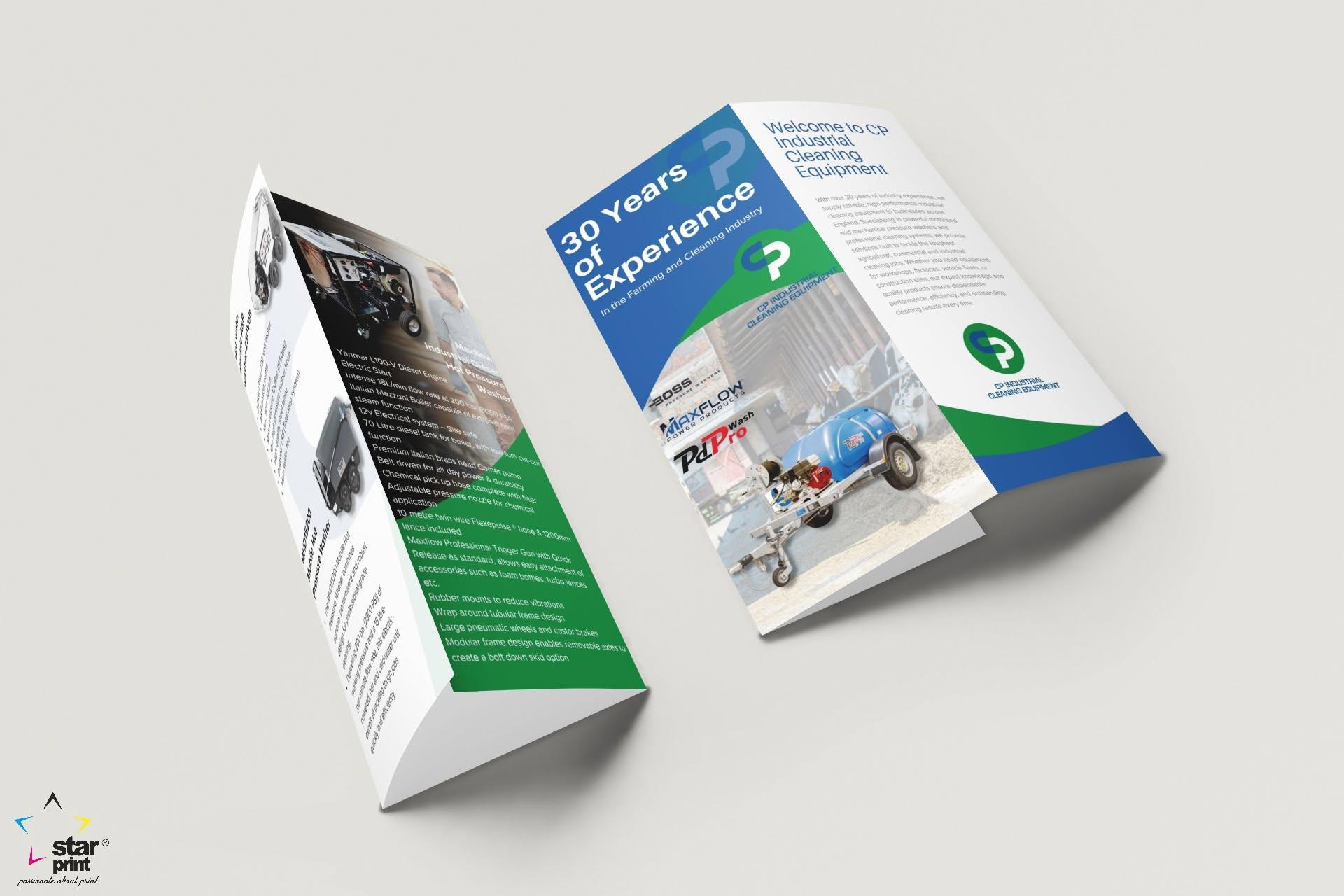
A folded leaflet is usually produced from one sheet. A half-fold creates four printable panels across the two sides. Folding a sheet into three sections creates six panels. Flat size is the size before folding; finished size is the size once folded.
A roll-fold tucks one panel inside the others. A concertina or Z-fold alternates the fold direction. They open differently, so the reading order and artwork layout need to match the fold.
For example, an A4 sheet folded in half produces an A5 finished leaflet. A three-panel roll-fold may require a slightly narrower fold-in panel so it closes neatly. Ask for the correct template rather than dividing the artwork into equal panels by assumption.
Brochures and booklets: content in page order
A bound booklet gives you a sequence of pages for longer service information, product ranges or event programmes. Saddle stitching uses wire staples through the centre fold of nested sheets. Each folded sheet contributes four pages, so a conventional saddle-stitched booklet has a total page count in multiples of four.
Count printed faces, including the covers, and make the quotation clear. “16 pages including cover” means something different from “16 text pages plus a 4-page cover”. A self-cover uses the same stock for the cover and inner pages; a separate cover may use another stock.
Paper, creasing and handling
Paper weight is expressed in GSM, but weight alone does not describe stiffness or thickness. The coating, grain direction and bulk of the stock also matter. Creasing creates a defined fold line and may be recommended for heavier stocks to improve folding and help reduce surface cracking.
Discuss the combination of stock, fold or binding and page count with the printer. Do not choose a heavy paper solely because it sounds more premium: the finished piece must open and handle comfortably.
Which format fits your job?
- Short menu or service overview: a folded leaflet may provide enough space in a compact format.
- Detailed product range: a booklet can separate information into clear sections.
- Event information: choose according to the programme length and how visitors will carry it.
Supply artwork for the agreed format
Confirm panel dimensions for folded work. For booklets, ask whether single pages in reading order are required; do not create printer spreads unless requested. The printer normally handles imposition, which arranges pages on the printing sheet.
Explore our leaflets and flyers and brochure range. Send us your content length, quantity and intended use if you would like help choosing.
Technical reference: Adobe’s explanation of booklet imposition and binding styles.